Our MRO is on staff, not on a queue somewhere.
What an MRO actually does
A laboratory does not decide whether an employee failed a drug test. It reports what it found. The Medical Review Officer — a licensed physician trained and certified in the federal testing process — is the person who turns a laboratory finding into a verified result an employer can act on.
Under 49 CFR Part 40 the MRO must review every non-negative, contact the donor, consider whether a legitimate medical explanation exists, and only then verify the result as positive, negative, refusal, cancelled or dilute. That review is not optional and it is not a formality. It is the safeguard that stops a legally prescribed medication from ending someone's career.
Why in-house matters more than it sounds
Most third party administrators outsource MRO review to a national service. Your specimen joins a national queue, the donor interview waits its turn, and a straightforward verification can take days. Meanwhile a driver sits idle and a load sits undelivered.
IPS employs its own DOT-certified MRO. Same building, same team, same-day escalation when something is urgent. Non-negatives that would sit in a queue elsewhere are typically resolved in 24 to 48 hours here, and a post-accident case can be pushed to the front on a phone call.
You never see medical information. If a donor has a valid prescription, the MRO verifies the result as negative and the prescription details stay confidential. The employer is told the outcome, not the diagnosis — which keeps you clear of ADA and privacy exposure.
The verification outcomes, and what each means for you
| Outcome | What it means | Your next step |
|---|---|---|
| Verified negative | No prohibited substance, or a valid medical explanation accepted | Employee may perform safety-sensitive duty |
| Verified positive | Prohibited substance confirmed with no legitimate explanation | Immediate removal from duty; report to Clearinghouse; SAP referral |
| Refusal to test | Adulterated, substituted, or donor failed to complete the process | Treated the same as a positive |
| Negative — dilute | Valid but over-diluted specimen | Recollection may be directed under your policy |
| Cancelled | A fatal or uncorrected procedural flaw | Test does not count; a recollection may be required |
Safety concerns and the medication conversation
Where a donor is taking a legally prescribed medication that could affect safe performance of a safety-sensitive function, the MRO may raise a safety concern with the employer — without disclosing the medication itself. It is a narrow, carefully bounded conversation, and having the MRO in-house means it happens promptly and with someone who knows your operation.
Split specimen testing
An employee who disputes a verified positive has 72 hours to request testing of the split specimen at a second certified laboratory. We handle the request, the logistics and the outcome, and we make sure the driver is told about this right at the time of verification — a step that gets skipped surprisingly often and shows up later as a finding.
MRO services for your program
Review that stands up to scrutiny
Certified physician review
Donor interview
Confidential handling
Split specimen management
Dilute & invalid handling
Clearinghouse reporting
Medical Review Officer — your questions
A licensed physician with specific training and certification in the federal drug testing process. Under 49 CFR Part 40 the MRO reviews every non-negative laboratory result, interviews the donor, considers legitimate medical explanations and issues the final verified result.
Because a laboratory finding is not proof of misuse. The donor interview is the employee's opportunity to disclose a valid prescription or medical explanation. If one exists and is verified, the MRO reports the result to the employer as negative and the medical detail stays confidential.
No. The MRO reports only the verified outcome. In limited circumstances the MRO may raise a safety concern about an employee's ability to perform safety-sensitive duty, but without disclosing the underlying medication or condition.
Every DOT collection produces two bottles. If a result is verified positive, an adulteration or a substitution, the employee has 72 hours to request that the second bottle be tested at a different SAMHSA-certified laboratory. IPS explains this right at verification and manages the request if it is made.
Materially, yes. Outsourced MRO review puts your specimen into a national queue. With the MRO on staff we can escalate urgent cases — a post-accident test, a driver waiting to be dispatched — the same day, and typical verifications close in 24 to 48 hours.
Yes. We provide standalone MRO services to employers and to other administrators who want faster, more accountable verification without changing the rest of their program.
Still have a question? Call 248-526-9000 or send us a message.
Services that pair with this one
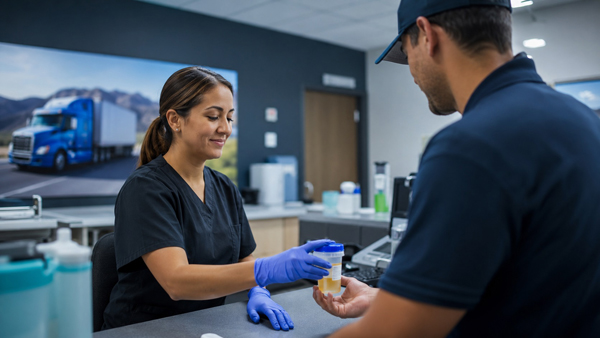
DOT Drug Testing
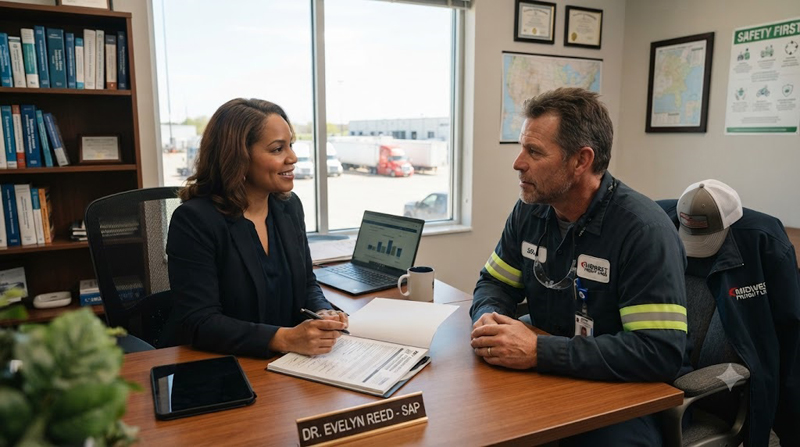
SAP Program Setup

FMCSA Clearinghouse